
Why do people experience homelessness?
Lack of Affordable Housing

Across the nation, there is a shortage of affordable housing. Similarly, in Pennsylvania, there are not enough affordable units available for extremely low renter households. Low-income renters often work low-wage jobs that do not meet the demand for the cost of housing. Low-income renters are often forced to choose between living in poorly managed apartments or becoming homeless.
Learn More About Housing Affordability

A safe, stable home is more than just a place to live—it’s the foundation for well-being, connection, and opportunity. When communities work together to address homelessness with data-driven solutions, trauma-informed care, and housing-first approaches, we create lasting change. By ensuring everyone has a place to call home, we foster mental health, strengthen families, and build a future where housing is a right, not a privilege.

With a growing gap between housing costs and wages, the dream of living in Chester County is slipping away for many families and individuals. A West Chester faith community, Westminster Presbyterian Church, has been at the forefront of advocacy and change, making significant strides toward addressing the housing affordability crisis. The Home Team explains the problem and its impact, and has provided some resources to explore how we, as a community, can make housing attainable for all.
WEST GOSHEN - It is something of a mantra recited by leaders in Chester County that their home is a great place to live, work, raise a family and retire. And while that it is almost certainly true, it is also evident that it is not necessarily an affordable place to live, work, raise a family and retire, especially if you have a household that falls below the median income of $110,000.
The Partnership is excited to extend our heartfelt congratulations to our esteemed partner organizations for their well-deserved recognition and success in being awarded the 2023 Pennsylvania Housing Affordability and Rehabilitation Enhancement (PHARE) funding. Read this blog post to learn more about how PHARE helps address the housing affordability crisis, and how you can help increase the funding cap for this vital program.
The Center on Budget and Policy Priorities, a nonpartisan research and policy institute in Washington, D.C., presents the pressing housing affordability crisis affecting people with the lowest incomes and recommend policies to move toward the goal of ensuring everyone in this country is able to afford safe, stable housing.
The nation is currently facing one of the most severe affordable housing crises in history. Not surprisingly, those living in poverty are the most significantly affected. The National Alliance to End Homelessness provides an overview of why housing affordability and homelessness are interconnected.
Poverty and Homelessness

Extremely low-income renters in Pennsylvania are often spending more than 30% of their household’s income on rent. For some, living with a disability can mean they are unable to work. For others, low-income wages, underemployment, or unemployment often means that they do not make enough money to pay their bills and are at-risk of losing their housing.
Learn More about Housing & Poverty

Understanding the complexities of homelessness requires an exploration of the interconnected threads that shape the fabric of our lives. Social determinants of health, as defined by the American Medical Association, encompass the community-wide conditions in which people are born, grow, live, work, and age. Among these determinants, race, gender, and sexuality play pivotal roles in shaping housing outcomes.
The Partnership is excited to extend our heartfelt congratulations to our esteemed partner organizations for their well-deserved recognition and success in being awarded the 2023 Pennsylvania Housing Affordability and Rehabilitation Enhancement (PHARE) funding. Read this blog post to learn more about how PHARE helps address the housing affordability crisis, and how you can help increase the funding cap for this vital program.
Poverty affects older adults differently than other groups because they are more vulnerable to economic instability when their physical health, cognitive abilities, and social networks decline. The National Alliance to End Homelessness outlines how poverty and homelessness are connected for older adults.
Low-income households are typically unemployed or underemployed due to a number of factors, such as a challenging labor market; limited education; a gap in work history; a criminal record; unreliable transportation or unstable housing; poor health or a disability. For those who are low-income but employed, wages have been stagnant and have not kept pace with expensive housing costs. The National Alliance to End Homelessness outlines how income and housing affordability are connected.
Shriver Center on Poverty Law shares how source of income discrimination disproportionately affects people of color, women, and people with disabilities.
Out of Reach documents the significant gap between renters’ wages and the cost of rental housing across the United States. The report’s central statistic, the Housing Wage, is an estimate of the hourly wage a full-time worker must earn to afford a modest rental home at HUD’s fair market rent (FMR) without spending more than 30% of his or her income on housing costs, the accepted standard of affordability.
Health and Homelessness

Poor health can often lead to homelessness due to expensive medical bills and the inability to work. Once someone becomes homeless, living on the street can exacerbate and even cause severe health conditions including infections, pneumonia, and other injuries. Without housing, chronic diseases like hypertension, diabetes, mental health and substance use conditions become difficult to manage, and the threat of violence and communicable diseases increase.
Learn More about Housing & Healthcare
A safe, stable home is more than just a place to live—it’s the foundation for well-being, connection, and opportunity. When communities work together to address homelessness with data-driven solutions, trauma-informed care, and housing-first approaches, we create lasting change. By ensuring everyone has a place to call home, we foster mental health, strengthen families, and build a future where housing is a right, not a privilege.
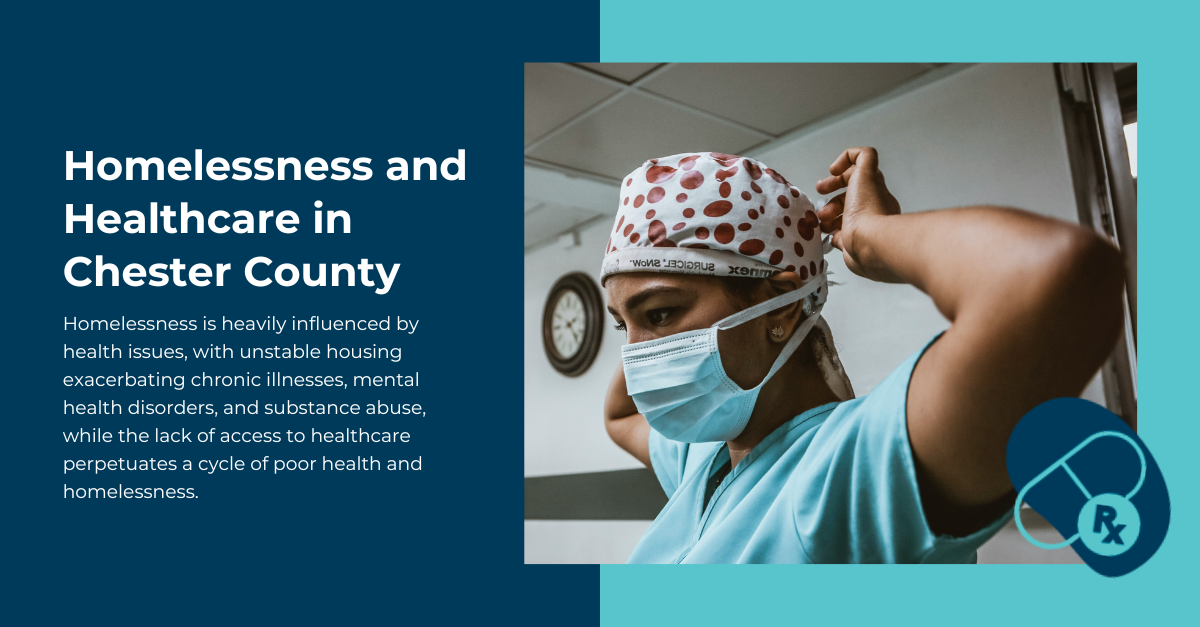
Homelessness itself is a serious health condition. According to the National Health Care for the Homeless Council, people who are homeless have higher rates of illness and die on average 12 years sooner than the general U.S. population. Individuals without stable housing are also more likely to suffer from chronic illnesses, mental health issues, and substance abuse disorders. An injury or illness can quickly turn into homelessness when you account for the loss of employment that comes with being ill, the unhealthy living conditions that exacerbate any health issues, and the lack of access to healthcare.
Understanding the complexities of homelessness requires an exploration of the interconnected threads that shape the fabric of our lives. Social determinants of health, as defined by the American Medical Association, encompass the community-wide conditions in which people are born, grow, live, work, and age. Among these determinants, race, gender, and sexuality play pivotal roles in shaping housing outcomes.
People’s homes can have a major impact on their health and well-being. Healthy People 2030 focuses on reducing health and safety risks in homes.
A group of local hospitals and health systems collaborated on the Southeastern Pennsylvania Community Health Needs Assessment, with specific focus on Bucks, Chester, Delaware, Montgomery, and Philadelphia Counties, to continue collaboration and provide opportunities to expand and improve upon the last assessment process. Participants recognize this assessment as an important part of how health systems, multi-sector partners, and communities work together to achieve meaningful and positive community change.
This report published in the National Library of Medicine addresses many of these issues in the context of public health and explore the public health implications and potential solutions to homelessness, focusing on contemporary and emerging research and innovative strategies, and highlighting best practices to address homelessness among key populations.
Domestic Violence

Individuals experiencing violence in their home are often faced with the cruel choice to stay with their abuser or leave and become homeless. A shortage of affordable housing in Chester County compounds the challenges for domestic abuse survivors looking for safe, stable homes near childcare or work.
Learn More About Housing & Domestic Violence

Domestic violence is one of the leading causes of homelessness, especially for women and children. Survivors face a complex array of challenges when trying to rebuild their lives, from securing housing to addressing emotional and financial needs. This is where the Domestic Violence Housing First (DVHF) model comes in, offering a survivor-centered, trauma-informed approach that prioritizes getting survivors into stable housing as quickly as possible. Unlike traditional methods, DVHF not only provides a roof over their heads but also offers ongoing support tailored to the unique needs of each survivor.
In a recent state-wide survey of domestic violence survivors, 93% of the respondents ranked housing as their most pressing need. The Domestic Violence Center of Chester County offers resources and programming to support domestic violence victims in finding safe, affordable housing.
The National Domestic Violence Hotline adapted Sarah M. Buel’s “Fifty Obstacles to Leaving, a.k.a., Why Abuse Victims Stay” outlining 50 different reasons why abuse victims stay that she has encountered throughout her 20+ years of work in the domestic violence field.
This paper summarizes findings from a community-based participatory research study conducted in collaboration with survivors from marginalized communities. The cycle of housing insecurity model presented in this paper draws attention to survivors’ barriers in getting and keeping housing. Recommendations are offered to counter these experiences through improved program services, policy implementation, and public awareness.
Rental Challenges

Every day, one person is evicted from their home in Chester County. Low-income renters face an uphill battle when it comes to finding affordable and available housing. In addition to a shortage of available units, in some cases, they must also contend with misconceptions around using housing vouchers and other non-wage income to pay for rent, among other forms of discrimination.
Learn More About Housing Barriers for Renters
Understanding the complexities of homelessness requires an exploration of the interconnected threads that shape the fabric of our lives. Social determinants of health, as defined by the American Medical Association, encompass the community-wide conditions in which people are born, grow, live, work, and age. Among these determinants, race, gender, and sexuality play pivotal roles in shaping housing outcomes.
With a growing gap between housing costs and wages, the dream of living in Chester County is slipping away for many families and individuals. A West Chester faith community, Westminster Presbyterian Church, has been at the forefront of advocacy and change, making significant strides toward addressing the housing affordability crisis. The Home Team explains the problem and its impact, and has provided some resources to explore how we, as a community, can make housing attainable for all.
Landlords and tenants in eviction court navigate a complex legal and administrative process. Eviction courts are overburdened and under pressure to process enormous numbers of cases each day.
Find more data, resources, and news about homelessness in Chester County and across the country.